Studio Notes
When the Brush Moves from Paper to Porcelain
Follow a single brushstroke from absorbent paper to glazed porcelain, and see how the surface, the curve and the kiln change what the eye sees.

Lay a blue brushstroke on a sheet of paper. Now imagine carrying that same movement onto the inside of a white porcelain dish. Before changing the brush or the motif, you have already changed three things: what receives the colour, how the line sits in space, and when the line is finished.
On paper, watch the edge
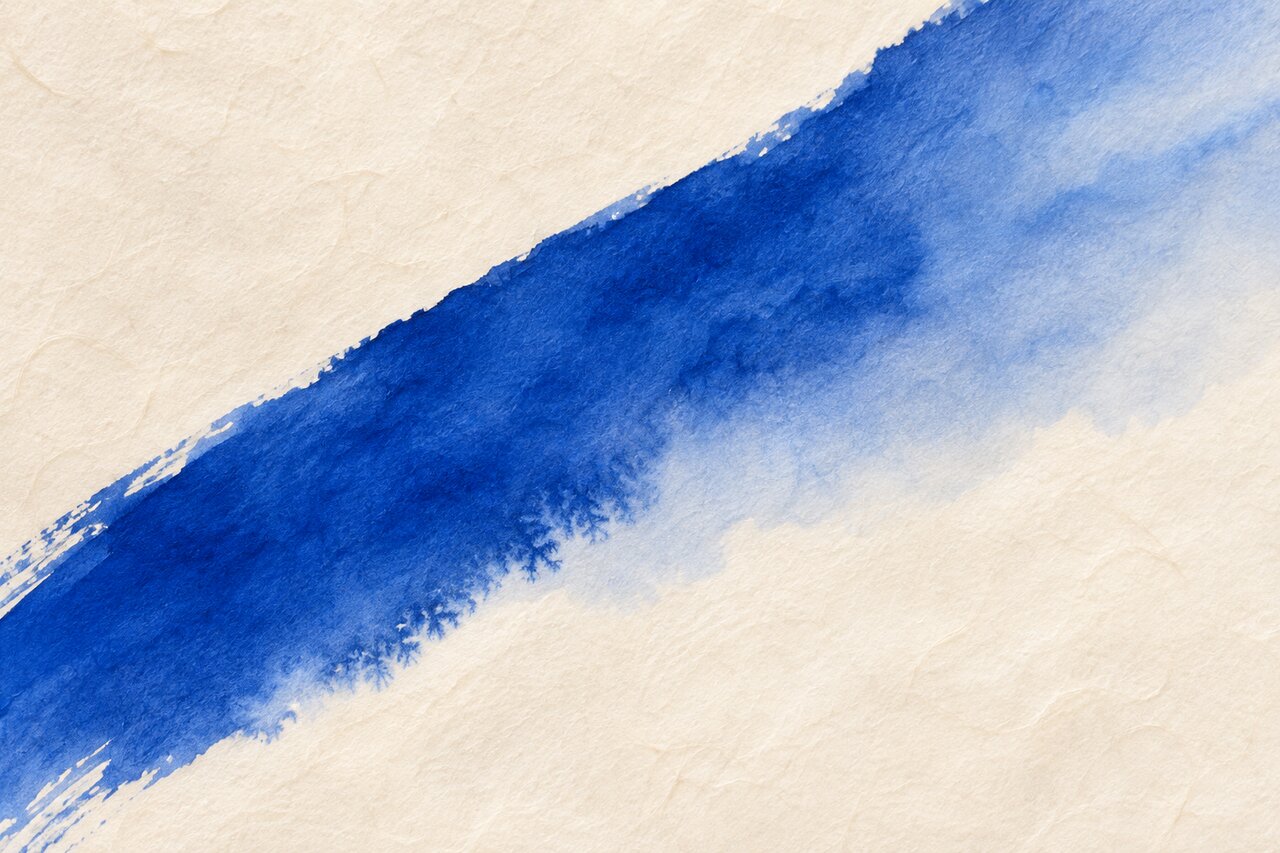
On absorbent paper, a wet stroke can feather into the fibres. A brush carrying less liquid may leave fine gaps where the paper still shows through. A more heavily sized sheet can keep the edge sharper. Start by looking at the boundary between blue and white: does it spread, break, or hold a clean line?
On porcelain, look beyond the brush
The surface depends on the stage of making. An unglazed body can also take up moisture; a fired glaze offers a different surface again. In underglaze painting, the decoration is applied to the body before it is covered with glaze. In overglaze enamelling, the colours are applied to an already glazed surface and fixed in a subsequent firing. It is not ordinary ink transferred to a dish: the ceramic colour, glaze and firing all matter.
The two methods can appear on one object. The Metropolitan Museum of Art’s Dish with lotus pond, made at Jingdezhen, places cobalt-blue outlines under the glaze and coloured enamels over it. It is a useful comparison for seeing the layers, not an example of Dehua ware.

A bowl changes the act of looking
On paper, the composition stays in one plane. On a bowl, a line may shorten in perspective, disappear around the curve, or come back into view as you turn the piece. Light can travel across the glaze while the painted line stays still. Next time you hold a painted cup, turn it slowly and watch whether your eye follows the line, the shape or the reflection first.
At Taiwu Gallery, this question also offers a way to revisit Huawen Xu: From Drawn Line to Tea Vessel. The point is not to decide which surface draws better. It is to notice what the maker has to rethink when a mark becomes part of something we hold.
Further reading: The Met’s Women China Decorators explains historical approaches to painting over and under glaze. The illustrations above were made for this essay; they do not depict exhibition works or document a firing experiment.