Journal / Perspectives
Beyond White: Dehua Porcelain at Changsha Museum
A source-based perspective on the 2026 exhibition, exploring white porcelain, craft and the journeys of ceramic objects.
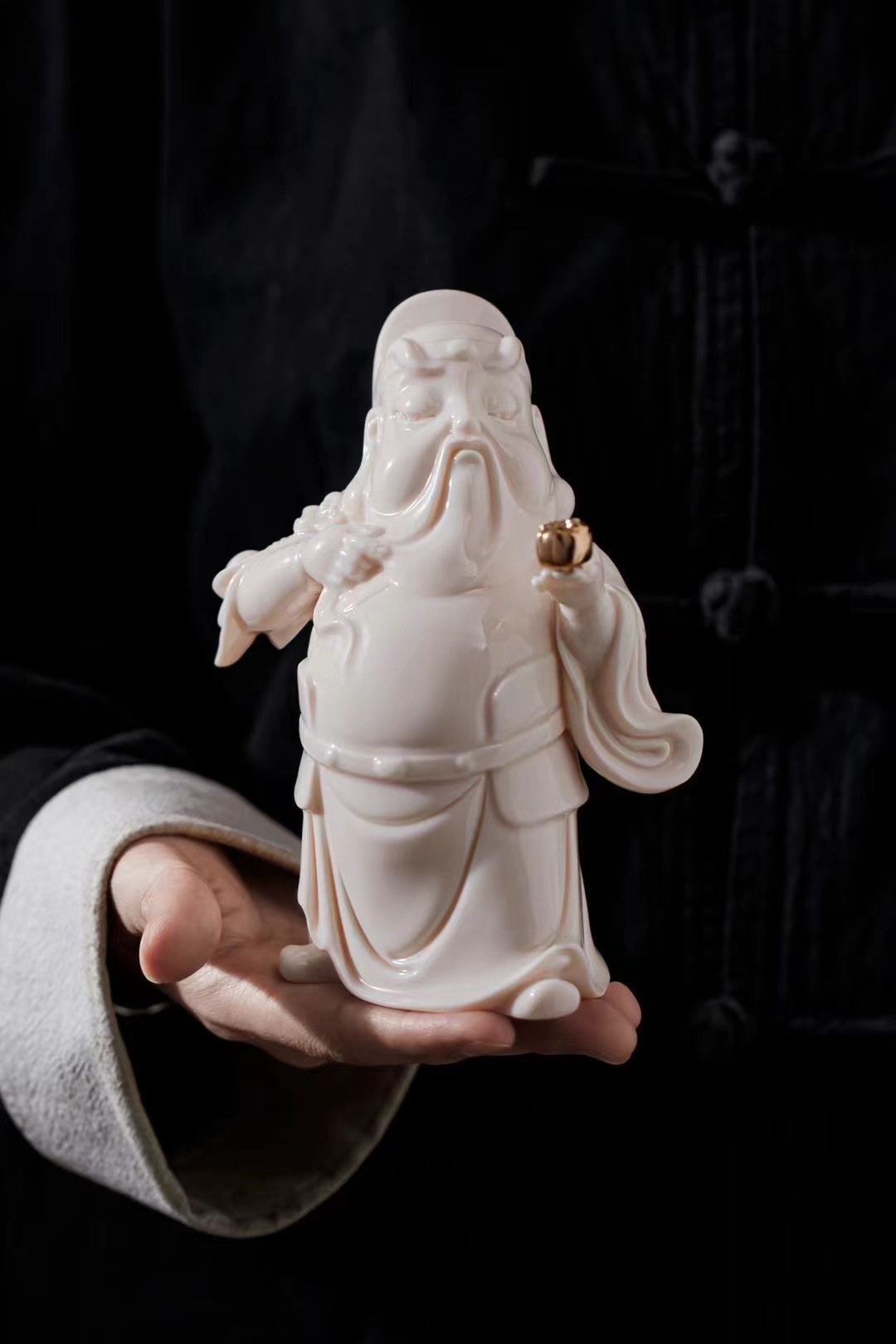
White porcelain invites a particular kind of attention. With colour held close, the eye can follow a rim, the meeting of two surfaces, or the changing depth of a fold. It is tempting to stop at that impression of quietness. An exhibition at Changsha Museum offers a reason to look further, toward the uses, places and journeys that give ceramic objects their histories.
The exhibition
According to the Hunan Provincial Cultural Heritage Administration, Changsha Museum’s special exhibition of Fujian Dehua ceramics runs from 24 September to 13 December 2026. Its announcement records 130 works or groups, bringing together Dehua ceramics and a supplementary selection of Changsha kiln export wares. Three sections introduce the development of Dehua production through to the present.
The exhibition is presented by the Changsha Municipal Bureau of Culture, Tourism, Radio and Television and jointly organized by Changsha Museum, Xiamen Museum and Dehua County Ceramic Museum. The official announcement lists admission as free. Visitors should confirm current opening and reservation arrangements with the museum before travelling. Official exhibition report
This essay offers a source-based perspective on the exhibition’s subject. Its observations about looking and making are an independent reading, rather than a report of an on-site visit.
A material with many uses
Dehua is a porcelain-producing centre in Fujian province. The Victoria and Albert Museum explains that the name blanc de Chine refers to white porcelains made there, while also noting the wider variety of wares produced by its potters. Its account places tableware, religious vessels, decorative objects and scholars’ implements within the same manufacturing landscape. For figurines, it describes a process that combines piece-moulds with details made separately and then attached. V&A: white porcelain from China
That range suggests a useful approach to looking. An apparently restrained surface can belong to objects designed for very different kinds of attention: the repeated handling of a vessel, the close study of a desk object, or the contemplation of a devotional image. Shape carries some of these distinctions. So do scale, placement and the relationship between an object and the body that uses it.
The description of moulding also helps us ask better questions about craftsmanship. Rather than treating repetition and individual skill as opposites, we can consider how they work together. Where does a repeated structure establish the form? Where might a separately made detail change its rhythm? These are questions to bring to labels and objects, not conclusions about an unidentified maker’s methods.
The same V&A account places the arrival of Dehua white wares in Europe within seventeenth- and eighteenth-century maritime trade. That history turns the eye from surface to circulation. A vessel’s material character mattered to distant collectors, while its journey brought it into different settings and habits of use. V&A: Dehua porcelain and maritime trade
Looking outward from Changsha
The inclusion of Changsha export ceramics gives this exhibition a second point of reference. For broader historical context, Singapore’s Asian Civilisations Museum documents more than 50,000 Changsha bowls recovered from the ninth-century Tang Shipwreck. Its account places those wares within a cargo containing ceramics from several production centres and within maritime networks of exchange. These are examples from the Singapore museum’s collection, not objects identified here as loans to Changsha. Asian Civilisations Museum: Tang Shipwreck
Such evidence offers a way to think about ceramics beyond the isolated masterpiece. A vessel can be considered as a designed object, a product of organized labour, an item selected by a merchant and a possession given meaning by its eventual user. Each perspective asks for different evidence. A beautiful surface may prompt the first question, but a kiln site, a cargo or a household context can change the answer.
The comparison need not make Dehua and Changsha stand for a single, continuous story. Their differences are part of the interest. The productive question is how distinct ceramic traditions reached audiences beyond their places of manufacture, and how function and appearance helped those objects travel.
For readers approaching Dehua through its celebrated whiteness, the Changsha exhibition provides a starting point for that wider inquiry. Look first at the contour and surface. Then ask what the object was made to do, how its form was constructed, and what evidence survives of its movement. The pleasure of looking can deepen as those questions accumulate.
Editorial note: This is an independent essay based on published sources. Taiwu Gallery has no stated role in the exhibition. No exhibition photography is reproduced.