Journal / Craft
KOU: A Line of Attention
Looking closely at metal-rimmed porcelain, from a documented Ding-ware example to the visual language of Taiwu’s KOU selection.
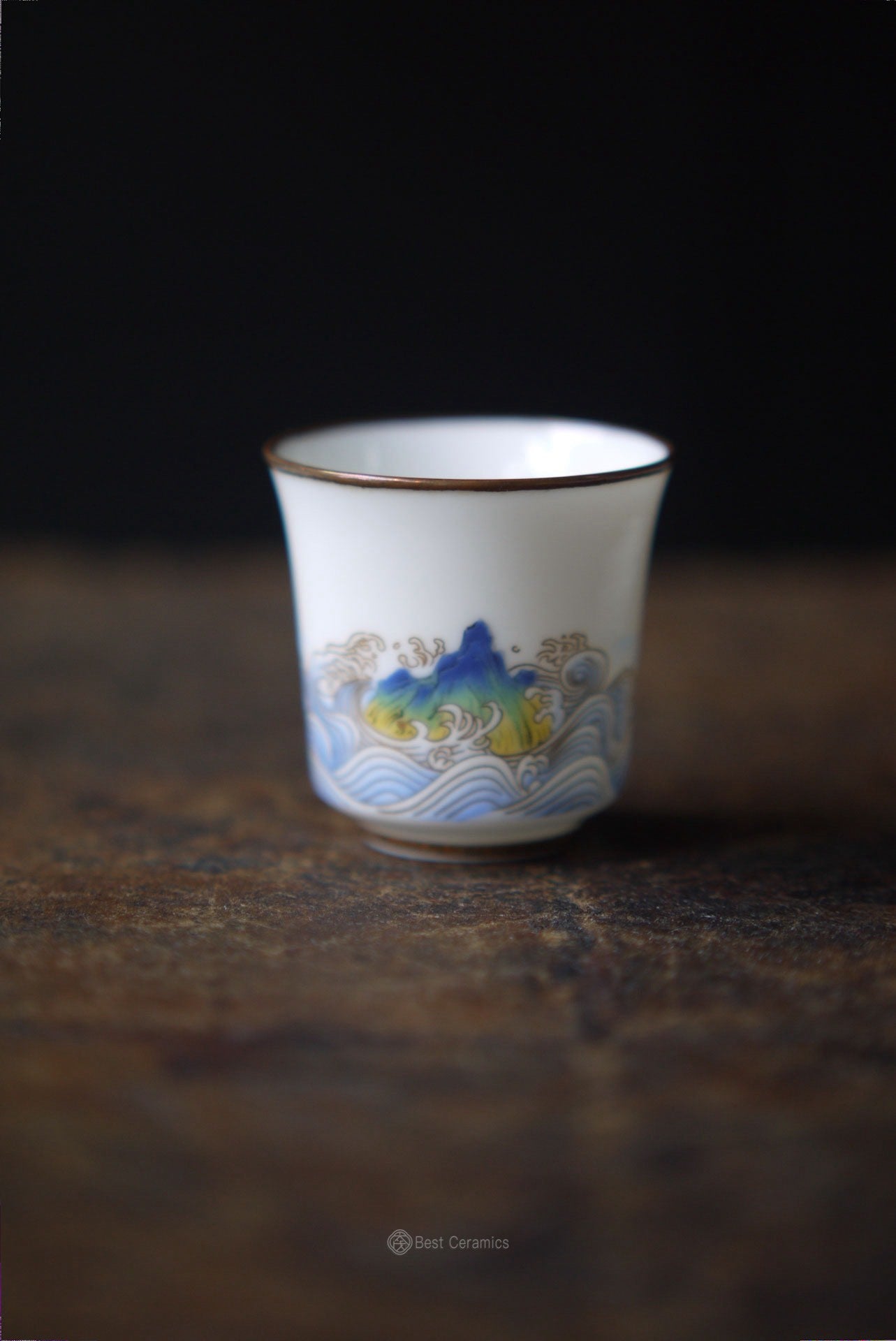
A narrow band can change the way we see an entire vessel. Around a porcelain cup, metal introduces a second surface: reflective, precise and distinct from the ceramic beneath it. In Taiwu’s KOU selection, that meeting at the rim becomes the focus of the object.
Our use of KOU describes metal-rimmed vessels. Rather than treating the edge as a finishing detail to overlook, we invite attention to the point where two materials meet. A darkened copper line can outline a pale body; a warmer metallic tone can echo a painted detail; a slender band can make a simple silhouette more legible.
A historical detail, viewed carefully
Metal rims have a documented place in Chinese ceramics. The Metropolitan Museum of Art’s account of a twelfth-century Ding-ware plate, accession 2013.569, explains that a copper band covers its unglazed rim. The vessel had been fired upside down to help support its thin form. This is a specific historical example, not evidence that every metal-rimmed cup shares the same date, purpose or kiln tradition.
It also shows why material details deserve close reading. What looks purely ornamental can be connected to how an object was made. A museum record can help us ask better questions without turning a contemporary piece into an antique by association.
Looking at the meeting of surfaces
The landscape-painted cup shown above offers one way to read the relationship. Its pale interior is bordered by a fine, darker line. Below it, waves and landscape forms occupy the body. The metal acts as a visual boundary between the open space of the cup and the movement of its decoration.
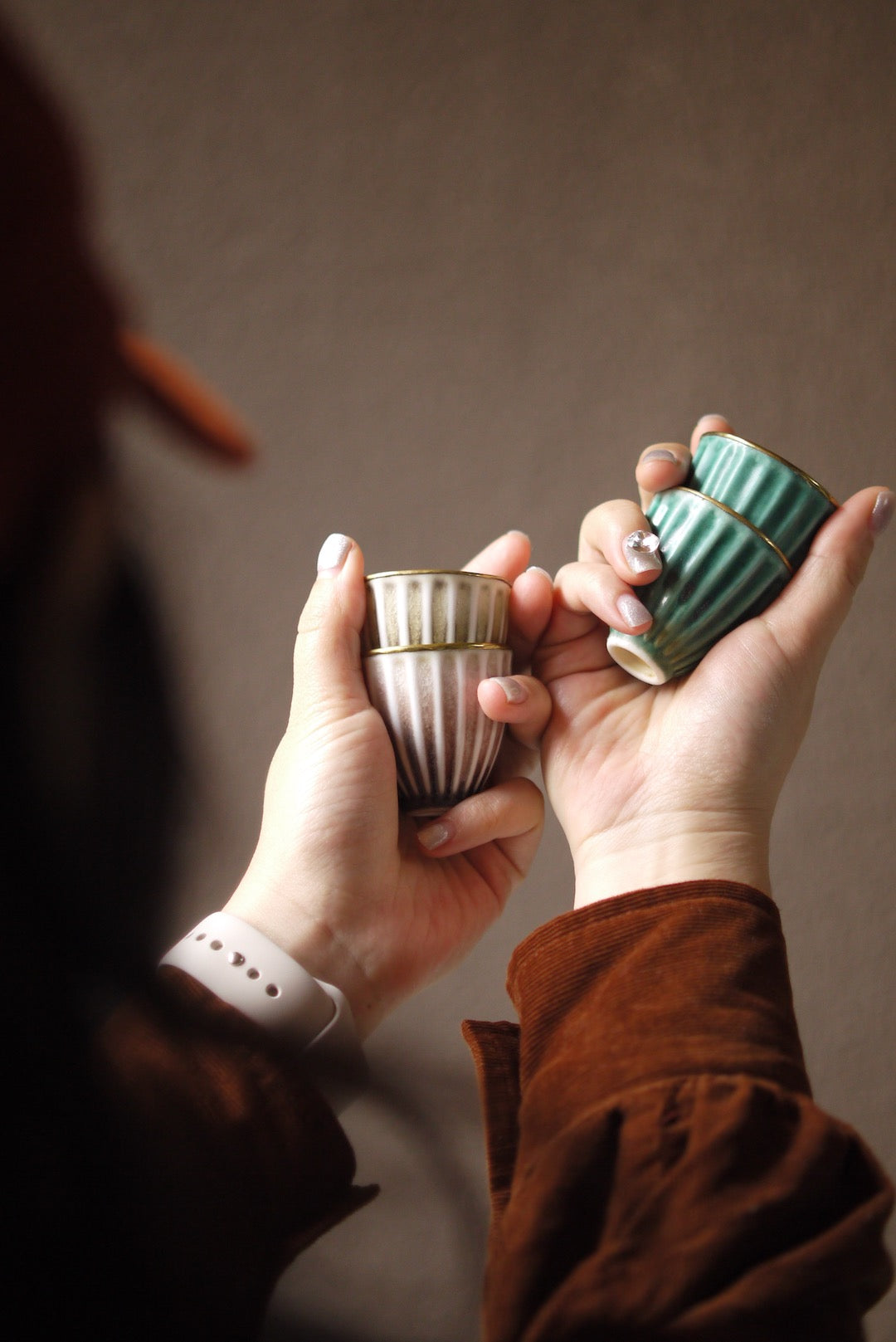
In the fluted cups, the effect is different. Vertical ribs carry the eye towards the opening; the rim gathers those lines into a circle. The same small intervention can therefore produce different visual rhythms depending on the vessel beneath it.
Individual objects, individual histories
A rim alone cannot establish an object’s age, the composition of its metal or whether it was added as part of repair. Those details should be recorded for each piece. Nor should a decorative band be read as a blanket promise of durability or suitability for every kind of use.
For us, the most rewarding starting point is simpler: look at the edge, then look again at the whole. KOU gives a small part of a familiar vessel enough presence to slow down that act of looking.
See the KOU selection and the Metropolitan Museum’s historical example.