Journal / Studio Notes
From a Paper Boat to Lacquer Art
A folded sheet of paper becomes the starting point for Kevin Yuan’s lacquer tray, preserving its creases through layers of lacquer, fabric and patient work.
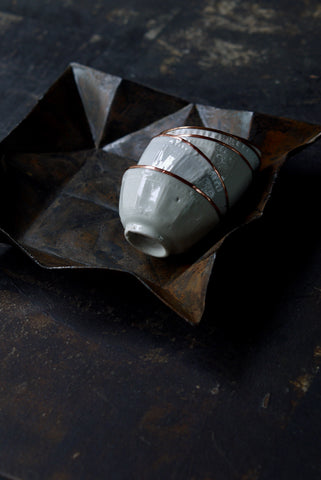
A sheet of paper can hold the memory of a small gesture. Once folded and opened again, it carries ridges, valleys and a shape that resists returning to flatness. In a project documented by Kevin Yuan in December 2024, those traces became the beginning of a lacquer tray.
The original object was a folded paper boat. When opened out, its centre offered a level area while its edges fell into uneven curves. Kevin kept that arrangement as the basis of the work. The photographs record a transformation in which the first folds remain important, even as the material becomes firmer and its surface changes.
A form found in the folds
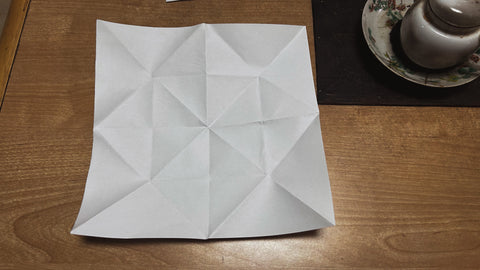
The early paper study is spare and direct. Light catches the crease lines, making a modest sheet appear almost architectural. Its shape suggests how a useful object might grow from something already at hand. The maker’s attention begins with a decision to preserve these particular marks.
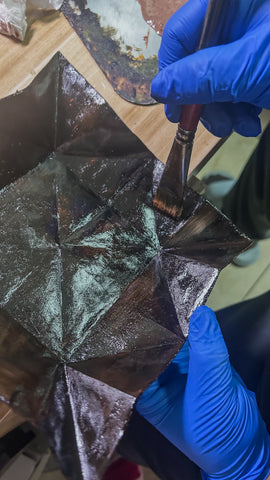
According to Kevin’s account, successive layers of natural lacquer helped the paper hold its form. The edges were allowed to settle under their own weight. Fabric was then added with a mixture of lacquer and glutinous rice paste, reinforcing the structure while retaining the folded outline.
Building a surface slowly
The account describes filling the fabric’s open texture with a lacquer paste containing tile ash, followed by sanding. Establishing the base took more than a month. Further applications of raw lacquer and additional sanding developed the surface visible in the later photographs.
These stages offer a useful way to look at the finished form. Its sharp changes of direction belong to the paper, while the darker, more complex surface records the later work. The tray carries both. A small change in the angle of light makes one facet recede and another come forward.
Keeping the beginning visible
For a gallery concerned with material and care, this is a compelling object to spend time with. It asks us to notice the shape before the finish, and the finish before making assumptions about what lies beneath. The modest origin remains part of the work’s character.
The photographs shown here are an archive of this particular project. They invite a closer look at how making can develop an existing form, leaving its first decisions visible. Readers can explore Kevin’s original studio account for the documented sequence, or discover more about craft and material at Taiwu.